
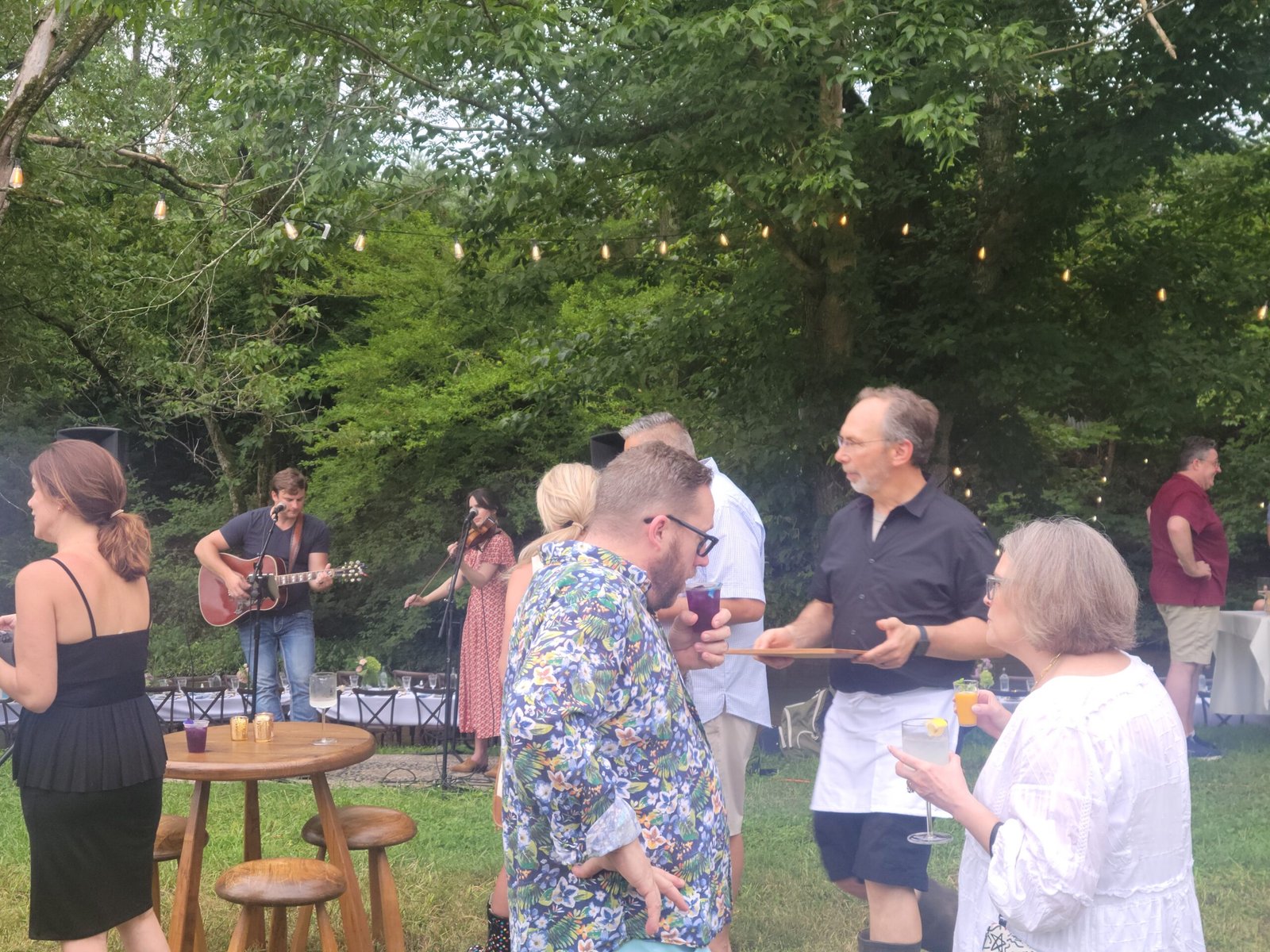
Executive Offsites in Nashville: Why Structured Experiences Create Better Outcomes
There is a quiet truth about executive offsites that rarely makes it into marketing decks.
Most of them underperform.
Not because the hotel was wrong. Not because the agenda lacked ambition. Not because the leadership team lacked intelligence. They underperform because structure erodes under social pressure.
The moment the day transitions from conference table to cocktail hour, intention dissolves into noise.
I have hosted enough leadership teams in Nashville to see the pattern clearly. The offsite begins with clarity. Strategic alignment. Big-picture thinking. Hard conversations. Then the evening experience becomes a default hospitality play. A dinner reservation. A bar crawl. A loosely organized tasting. Something labeled “team bonding” but functionally chaotic.
Executives do not need chaos. They need containment.
That distinction matters.
An executive offsite is not about entertainment. It is about controlled environment. The right experience protects the energy built during the day instead of scattering it.
This is where structured, professionally facilitated experiences outperform casual hospitality every time.
When a leadership team moves from a day of strategic work into an unstructured evening, several predictable things happen. Dominant personalities dominate further. Quieter contributors withdraw. Alcohol becomes the social equalizer rather than the shared objective. The experience becomes about volume rather than alignment.
A structured experience prevents that drift.
In Nashville, executive teams often want something that feels local. They want cultural texture. They want to connect to Tennessee in a way that feels authentic rather than tourist-facing. The mistake is assuming that authenticity requires looseness. It does not.
The strongest executive programming I have facilitated works because it maintains professional pacing while introducing cultural depth. The structure is visible. The facilitator presence is strong. The timeline is clear. There is a defined beginning, middle, and end. That clarity allows executives to relax without losing focus.
When leaders feel the container, they engage more deeply inside it.
Nashville is a powerful backdrop for offsites because it carries identity. Music, hospitality, whiskey, storytelling. But identity without structure becomes spectacle. The goal is not to overwhelm executives with local flavor. The goal is to integrate local context into a controlled, outcome-driven format.
Consider what happens inside a structured workshop.
Every guest builds with intention. Every step is guided. Conversation happens naturally because the group is working toward a shared objective. Cultural history becomes part of the narrative without turning into a lecture. The facilitator manages pacing. The logistics are handled seamlessly. The leadership team remains present rather than distracted by operational details.
The difference is subtle but measurable.
Executives leave with more than a pleasant evening. They leave with shared reference points. Inside jokes rooted in structure. A sense of cohesion reinforced by doing something together rather than watching something happen.
This distinction is important.
Entertainment is passive. Structured experience is participatory.
In executive environments, participation creates memory. Memory creates alignment.
Another overlooked element of executive offsites is time discipline. Leaders operate in tight schedules. When an evening experience runs long or begins late, it disrupts the next morning’s work. When a program lacks clear pacing, it erodes trust.
Structured programming communicates respect for time.
Clear start. Clear finish. Clear transition back to hotel or private venue.
In Nashville, many executive teams operate out of hotels in the downtown corridor or the Gulch. Others choose private venues or retreat properties slightly outside the city core. The location changes. The need for structure does not.
Hotel-based programming benefits from contained environments. Private venues allow for controlled customization. Offsite retreats outside downtown provide separation from daily noise. In each case, the facilitation must match the setting.
A structured experience is scalable. It works for eight executives in a boardroom. It works for forty department heads in a private event space. It adapts without losing clarity.
This scalability is critical for leadership teams planning multi-day retreats. The evening experience should support the day’s agenda. It should not compete with it.
When done correctly, the workshop becomes an extension of the strategic work rather than a break from it.
I have seen leadership teams use structured experiences to decompress after difficult sessions. I have watched sales departments reconnect after high-pressure quarters. I have facilitated executive retreats where the evening workshop became the moment that reset the tone of the entire offsite.
The reason it works is not novelty. It is design.
Design anticipates group dynamics. Design protects pacing. Design accounts for energy levels at 6:30 in the evening after a long day of meetings.
Executives value clarity. They respond to professionalism. They appreciate sobriety in facilitation. That does not mean the experience lacks warmth. It means warmth is managed, not improvised.
There is a phrase I return to often when working with leadership teams: engaging without spectacle.
Spectacle draws attention outward. Structure directs attention inward.
In Nashville, the temptation toward spectacle is strong. The city is known for energy. For nightlife. For volume. But executive offsites require precision.
When leaders travel here for strategic planning or client entertainment, they are not looking for the loudest room. They are looking for the most controlled environment.
That control allows conversation to deepen. It allows new relationships within departments to form. It allows senior leadership to model engagement without surrendering authority.
A well-run structured workshop reinforces hierarchy without making it rigid. It allows executives to participate alongside their teams while maintaining professional presence.
Another benefit often overlooked is logistical containment.
Executive planners already manage venue contracts, catering coordination, transportation logistics, and schedule alignment. Adding an experience that requires additional vendor oversight creates friction. A fully facilitated program that handles setup, tools, pacing, and cleanup reduces that burden.
Logistics matter.
When planners feel supported, they advocate for repeat programming. When executives feel clarity, they request the experience again for the next offsite.
In Nashville, corporate offsites continue to grow as companies choose the city for both its accessibility and its cultural identity. But the growth of the city has also increased noise. Not every offering is executive-grade.
Structured experiences separate themselves by communicating discipline from the first inquiry. Clear group size parameters. Defined timelines. Transparent expectations. Professional facilitation.
This tone signals alignment with executive culture.
Offsites are investments. They are not vacations. The evening experience should reflect that reality.
I often tell leadership teams that the most successful offsites maintain continuity between day and night. If the daytime agenda is about clarity, the evening should not introduce confusion. If the day is about alignment, the evening should not fragment the group.
Structure creates continuity.
In practical terms, that means clear objectives for the experience. It means building participation into the format. It means designing moments of conversation rather than leaving them to chance.
It also means understanding the psychology of executives. Leaders are accustomed to control. When they enter a structured environment led by a confident facilitator, they relax into participation because they trust the container.
Trust is the currency of executive engagement.
Without it, even the most visually impressive experience falls flat.
Nashville offers many options for corporate entertainment. Few are designed with executive psychology in mind. Fewer still integrate cultural storytelling with professional pacing.
The goal is not to impress. The goal is to integrate.
When an executive offsite in Nashville concludes with a structured, culturally rooted, professionally facilitated experience, the group leaves with a reinforced sense of shared identity. They carry stories home. They carry references back into meetings. They carry a subtle cohesion that did not exist before.
That cohesion is the outcome.
Executive teams do not measure success in decibels. They measure it in alignment.
A structured experience protects alignment.
When planning an executive offsite in Nashville, the question is not whether to include an evening program. It is whether that program supports the day’s strategic objectives or distracts from them.
Structure ensures support.
Design ensures outcome.
Professional facilitation ensures presence.
That combination creates better results.
About the Author
Chris Mallon is the founder of Tennessee Whiskey Workshop and a hospitality strategist based in Nashville. With over two decades in high-level beverage and experiential programming, he designs structured corporate experiences for leadership teams, executive retreats, and client entertainment events across Nashville. His work focuses on professional facilitation, cultural integration, and measurable group alignment.
0 Comments