
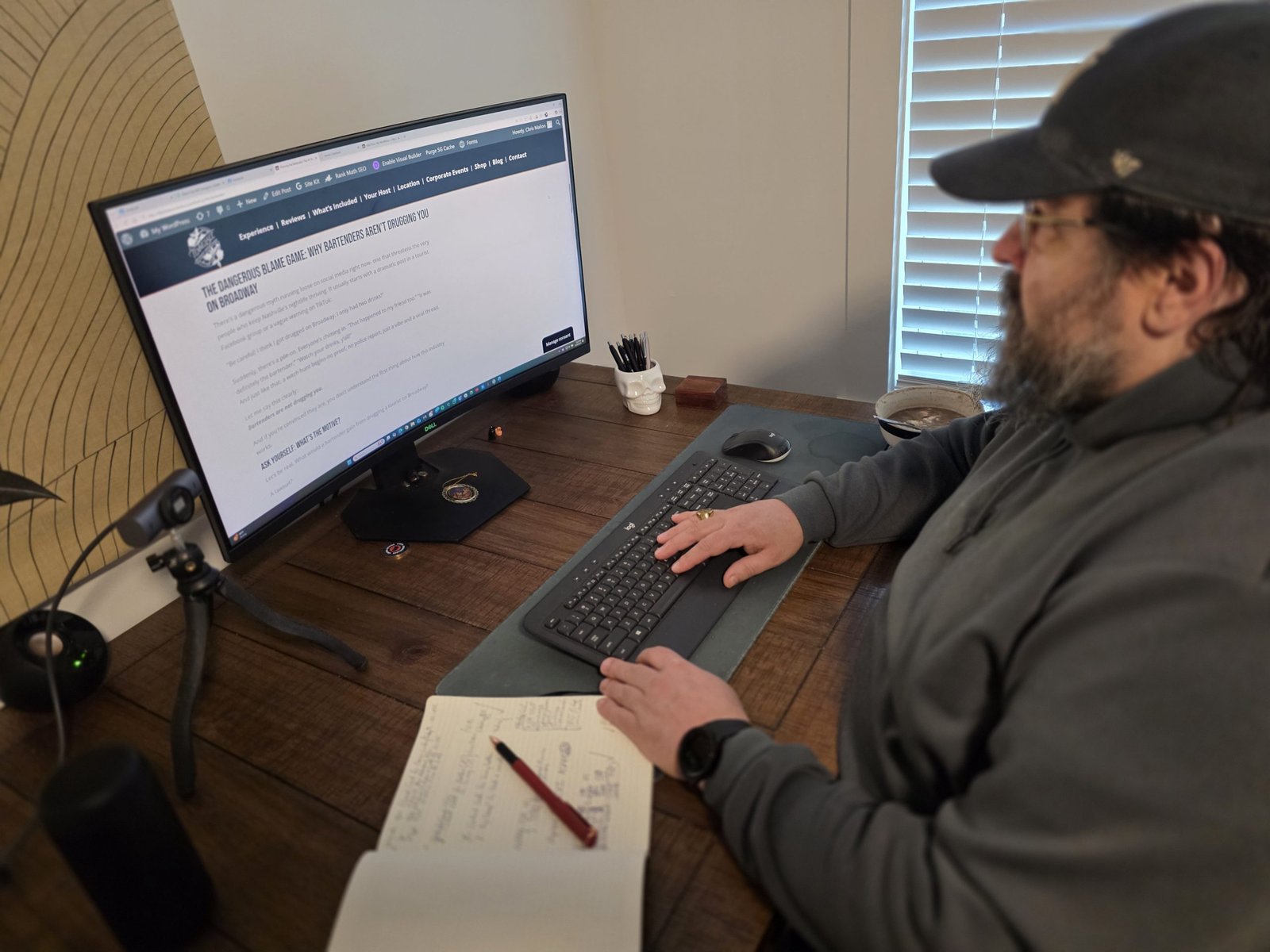
What I Learned From Writing About Hospitality This Deeply
When you write about an industry long enough, you start to hear its pulse in places you never expected. In the early mornings. In the quiet shifts. In the pauses between a question and its answer. The lessons don’t arrive in word counts. They arrive in the time spent looking closely at the world you came from.
Writing this much about hospitality didn’t teach me how to write better.
It taught me how to see the work again.
Hospitality Is Louder Than You Remember
Most people think hospitality is defined by noise. The crowded rooms. The open kitchens. The tight turns and quick hands. But when you sit down to write about it, the volume drops. The pace shifts. The truth shows up.
Writing takes the noise and turns it into texture.
Background.
Pressure.
Never the story itself.
The story is the people.
The ones holding the room together.
The ones pretending nothing is breaking.
The ones who leave a part of themselves at every shift and pick it back up the next day.
Writing forces you to hear the parts of the job that get buried beneath the rush.
Most of the Industry’s Real Work Happens Offstage
It becomes obvious quickly that hospitality is not built in the noise.
It is built in the margins.
The prep hours.
The small systems.
The handwritten checklists someone made years ago that still keep the room upright.
The more you write, the more you see how much of service depends on what happens long before a guest ever sits down.
A perfect service is choreography.
A broken one is still choreography.
The work behind it is the same: show up, adjust, recover, repeat.
Writing brings that structure into focus.
It also reveals how fragile it is.
The Industry Has a Memory, Even When People Don’t
Writing about hospitality long enough teaches you that the room holds more memory than the people inside it.
It remembers who mentored without being asked.
It remembers who left.
It remembers the nights that broke someone open and the mornings they returned anyway.
The industry carries stories it never had time to name.
You can hear them when you stay still long enough.
Burnout Is the Shadow Behind Every Good Story
No matter where the writing started, it often came back to the same idea: hospitality requires more presence than it admits.
Presence costs something.
Shift after shift.
Season after season.
Writing didn’t glamorize that cost.
It clarified it.
It showed how easy it is to lose sight of yourself when the room needs something from you first.
This isn’t a complaint.
It’s recognition.
The quiet kind that helps someone feel seen.
Grace Is a Skill, Not a Soft Trait
Hospitality treats grace like a personality feature.
Writing made it clear that grace is discipline.
It is restraint when you want reaction.
It is clarity when the room fogs.
It is the ability to return to center when the energy tilts off balance.
Grace keeps service upright.
Not charm.
Not charisma.
Not performance.
Grace.
Writing revealed how often that skill goes unnoticed, even by the people using it.
The Work Is Harder to Explain Than It Is to Do
This is the strange thing: the doing is easier than the explaining.
You can teach a technique.
You can train consistency.
You can outline expectations and systems.
But the lived experience of hospitality – the part that binds people to the work for years – is harder to put on paper. It shifts and contradicts itself.
Writing exposed the gap between the job and the meaning behind the job.
And how wide that gap can be.
The Lesson That Stayed
After spending this much time writing about hospitality, one lesson settled in:
Hospitality isn’t the noise.
It’s the intention inside the noise.
It’s the skill of grounding people in a space that never stops moving.
It’s the ability to adapt without breaking.
It’s the understanding that service is never just service.
The writing didn’t change how I see the industry.
It reminded me why it matters.
If you’re interested in how the culture behind the work formed, I explored more of that foundation in this earlier piece.
U.S. Bureau of Labor Statistics – Leisure and Hospitality Sector
0 Comments